All posts

The Greek Optative Mood: μὴ γένοιτο and the ‘Vanishing’ Mood
The optative is the rarest Greek mood — the verb of wishes and remote possibility. It survives most…
June 24, 2026

The Greek Imperative Mood: Commands, and the Aspect Hidden in Them
The Greek imperative is the mood of commands — but present and aorist commands carry different aspect. Here's…
June 24, 2026
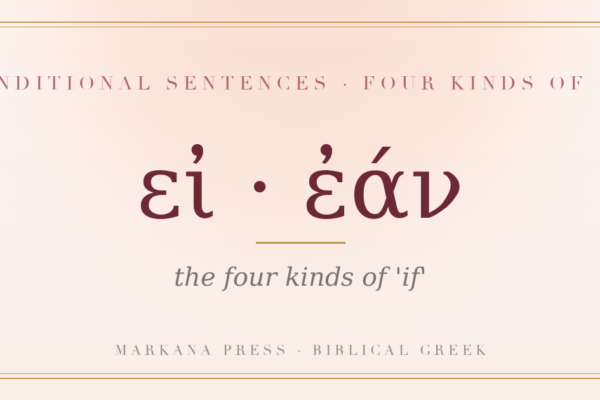
Greek Conditional Sentences: The Four Classes of ‘If’ Explained
Greek has four kinds of 'if' sentence, and knowing which is which changes the meaning. Here are the…
June 24, 2026
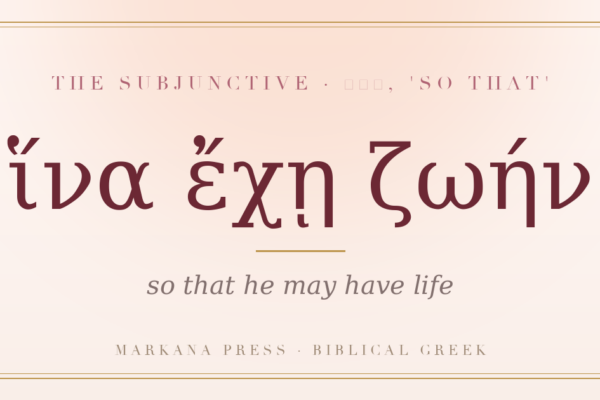
The Greek Subjunctive Mood: Purpose, Possibility, and the ἵνα Clause
The Greek subjunctive is the mood of purpose and possibility — the verb behind 'so that' (ἵνα) clauses…
June 24, 2026

Adverbial Participles in Greek: Temporal, Causal, and Concessive Uses
Greek's adverbial participle packs a whole 'when / because / although' clause into one word. Here's how to…
June 24, 2026

The Greek μι-Verbs: δίδωμι, τίθημι, ἵστημι and the Words You Can’t Avoid
A small family of Greek verbs ends in -μι instead of -ω, and they include some of the…
June 24, 2026

The Greek Perfect Tense: ‘It Is Finished’ (τετέλεσται) and Completed Action
The Greek perfect describes a completed action with results that still stand — which is why Jesus' cry…
June 24, 2026

The Greek Genitive Absolute: A Whole Clause in Two Words
The genitive absolute looks baffling until you learn its trick: a noun and a participle, both in the…
June 24, 2026

The Greek Participle: How One Word Can Be a Verb and an Adjective at Once
The participle is the most-used and most-feared form in New Testament Greek — a verb and an adjective…
June 24, 2026

The Greek Present Tense: The Verb λύω and How Greek Verbs Work
Greek verbs pack the subject right into the ending. Meet λύω, the model verb, and learn the present…
June 24, 2026
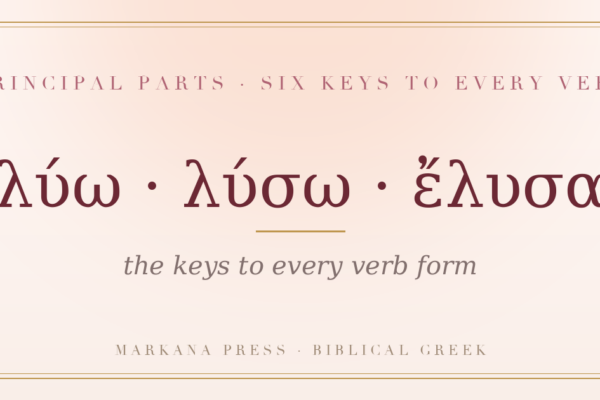
The Six Principal Parts of the Greek Verb (and Why They Unlock Everything)
Learn a Greek verb's six principal parts and you can build every form it has. Here's what the…
June 24, 2026

The Greek Third Declension: Find the Stem in the Genitive
The third declension is where many Greek learners stumble — until they learn one trick: the genitive form…
June 24, 2026